Category Archives: Uncategorized

Aw, Man! Can’t I Just Call It “Work In Progress” Forever?

Titles.

Sometimes they are tricky and you’re still hashing it out long after you’ve written The End.

Other times they come to you before you’ve even constructed a single line of prose.

Don’t you always want yours to be brilliant, catchy, and meaningful?

Maybe you’re a long title person. (Alexander and the Terrible, Horrible, No Good, Very Bad Day)

Maybe you’re a one-worder. (Twilight)

I’m currently reading Crafting Novels & Short Stories: Everything You Need to Know to Write Great Fiction.

One of the first things suggested by the authors (a collection of Writer’s Digest authors), even before you’ve written anything, is that you give your WIP a title.

A working title. A title that distinguishes your work from everything else saved on your computer and, at best, gives you some idea of what you’re writing about.

Check. I do that. I think most probably do.

But it’s kind of like naming a kid. Once I’ve called it something, it’s really difficult for me to change it. At least in my mind.

I’m sure some of you out there are more relaxed. One day you’re calling your story “The Zombie Apocalypse” and they next day it’s re-titled “Everything’s Coming Up Worms.”

I know authors who’ve had their titles changed at the prompting of their editors. I think that’s probably a weird feeling– wanting to do what’s best for the story and letting go of the name you gave it.

I wish we could do this for humans–suggest they change the names of their children. After all, it’s in the best interest and for the future success of the child. (No child should ever be called Earl. Or Floyd. Or Lurlene. Just sayin’.)

Nine times out of ten, during the writing stage, my title is just that–working. It changes several times before I finally pin down the perfect one.

Most of the time the title comes to me during the writing process, most likely when I’m at least 1/2 through my manuscript.

Once–just once–the title came to me first.

Share with me: How do titles work for you? Do they come to you before, during, or after your story? Are they tricky, or does the perfect title arrive wrapped in a shiny bow?

17 Comments

Filed under Uncategorized, Writing

Lessons I Want My Children to Learn: Patriotism

Do you know the difference between Memorial Day and Veteran’s Day? Other than one is in May and one is in November, I mean. 🙂

When I was teaching high school history, I always made it a point to teach the origins behind these important days.

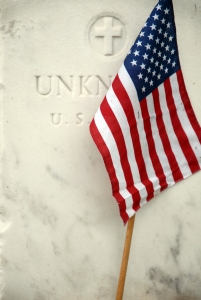
Memorial Day, as the name suggests, is the US national holiday in which we remember and honor those who have fallen in service to our great nation.

It began during the Civil War as Decoration Day, when women would decorate the graves of the fallen soldiers with flowers and other mementos. As the years went on and the US was involved in more wars, the holiday adapted and in the late 1960’s, was officially assigned to the last Monday in May when the nation would remember all service members who had died in any war in our nation’s history.

Veteran’s Day, as the name suggests, honors all active and retired veterans of all wars in our history. This date came about from Armistice Day of WWI, (November 11, 1918, 11 am) when an armistice (cease-fire) was declared, eventually leading to the end of the war in 1919.

As time goes on, it seems that the reasons behind Memorial Day, July 4th, and Veteran’s Day have become somewhat mashed together and given Americans a reason to have a day off of work and a cookout.

I’m okay with that. I love cookouts. I love the American tradition of hotdogs and hamburgers by the pool. It’s fun. It’s America.

I’m even mostly okay with the confusion between Memorial Day and Veteran’s Day, because both honor those who have served.

I am not okay with the general public not knowing the history behind our Independence Day celebrations of July 4th. You might be surprised how many people do not have a basic understanding of this momentous day. Yeah, it’s actually different from the other two, but I’ll save that history for another post.

One of the lessons I want to instill into my children is patriotism.

I don’t believe enough people in America actually appreciate America anymore. Somewhere along the way, we’ve lost our understanding of exactly what it means to be free. We’ve lost our sense of duty–we’ve lost our sense of honor.

There was a time when young men stood up, eager to serve. Most of the teens I taught were petrified of serving in the military– the idea was laughable.

Several times I had to combat the idea that serving in the military was only for “stupid” people who couldn’t get into college.

“Do stupid people win wars?” I’d ask.

As a military brat, I have to admit, it was difficult for me to keep my cool in the classroom when this subject came up–more often than I’d like to acknowledge. (I’d like to believe people are smarter than to think the military is only for “dummies”, but alas, many are not.)

I was raised in a military home, with a tradition of military service and the idea that serving our nation was honorable, desirable, and respected.

Although my husband is not military, I want my children to grow up with this same belief.

My husband actually teaches middle school, which is another position to be greatly respected. 🙂 He definitely serves his nation, folks.

My son’s great-grandfathers served in WWII. Their grandfather (my dad) served in Desert Storm. Their uncle (my brother) is currently serving his country.

The idea that standing up for the values that America was built on, what our forefathers believed in when they drafted the Declaration of Independence and the Constitution, is something to be admired.

While politics seem to continue to make a mess of the values that bore this nation, I want my sons to have an understanding of where we’ve come from, our history, our traditions, and what it really means to be an American.

I want them to believe that America is great. I want them to know it. I want them to be proud of all those who came before us, establishing this great nation. I want them to be proud to be an American.

So yes, we will be cooking out hamburgers this Memorial Day.

But we’ll also be talking about what it means to serve our country. We’ll talk about military service, an option that will be their choice someday, and we will talk about how even at their young ages, we can pray for our leaders, pray for our nation, and pray for those who have served, are serving, and for the families who love them.

Share with me: What’s your favorite thing about being an American?

8 Comments

Filed under Family, Parenting, Uncategorized

Are You Writing to Your Character’s Love Language?

My Sunday school class recently started a new study– The 5 Love Languages by Dr. Gary Chapman.

Some of you have probably heard of this book/study. It’s been around for awhile and has pretty much become a staple for anyone getting married or working to improve their marriage. (Aren’t we all?)

Although I’ve known about this book for years, I had never read it. So when my Sunday school teacher announced that this would be our study for the quarter, I was really excited.

I really wanted to get into the nitty gritty of what my love language is and what my husband’s is. And once we both took the quiz to discover that information, I was not at all surprised by the results. It pretty much pegged us.

We were discussing the results in class a few Sundays ago when our teacher recommended that we try to discover the love language of our children.

And I had an ah-ha! moment.

Why not use this material and apply it to my characters? I am a romance writer, after all. 

A little light bulb turned on over my head.

I started thinking about my WIP and almost immediately I knew what love language each of my lead characters communicated in. Because of that, I knew how he and she should respond to each other–what needed to happen for them to “feel” loved and how they would communicate their love to one another.

In case you aren’t familiar with The 5 Love Languages, they are as follows:

1. Words of Affirmation
2. Quality Time
3. Receiving Gifts
4. Acts of Service
5. Physical Touch

According to Dr. Chapman, each of us falls into one of these categories–this is what we need from our spouse or significant other in order to feel loved–this is also most likely how we communicate our love.

In order for a lasting relationship to happen, we need to understand what language our partner needs, learn to speak it, and have our partner return the favor.

I scored a perfect 100% for my primary Love Language to be acts of service. I wasn’t at all surprised by this. I don’t need diamonds or fancy dinners out or lavish vacations (although those things are nice!). What I need is for my hubby to occasionally fold the laundry, run errands for me, bathe our children, etc. Thankfully my husband speaks my Love Language pretty well. 🙂

My husband’s primary Love Language is physical touch. I wasn’t surprised by this, either. He likes to hold hands, hug a lot, put his arm around me. And he needs me to respond to that.

So, how can this information be applied to characters in a romance?

Think about your heroine. Among all the other things you consider about her at creation, how will she respond best and feel most loved and cherished when your hero comes a-callin’? Will it be the moment when he repairs the roof of her house? Will it be his silver tongue, laced with words of love that wins her? Or how about when his lips meet hers? Will she respond best to a box from Tiffany’s to know that she’s loved, or maybe just a walk on a beach at sunset?

What does she need to feel loved?

When considering my heroine, I knew right away that her love language was words of affirmation. She needs to hear them–she needs to be valued verbally. The more Hero praises her, builds her up, encourages her, the more she falls for him. Yeah, she likes the kisses. She likes the time they spend together, but she needs those words.

What does my hero need to feel loved?  

For him it’s physical touch. He needs to feel her respond to him. He needs to know that when his fingers linger on her hand, sparks are flying. He needs her to want to be close to him.

Yeah, I can totally make that happen. 🙂

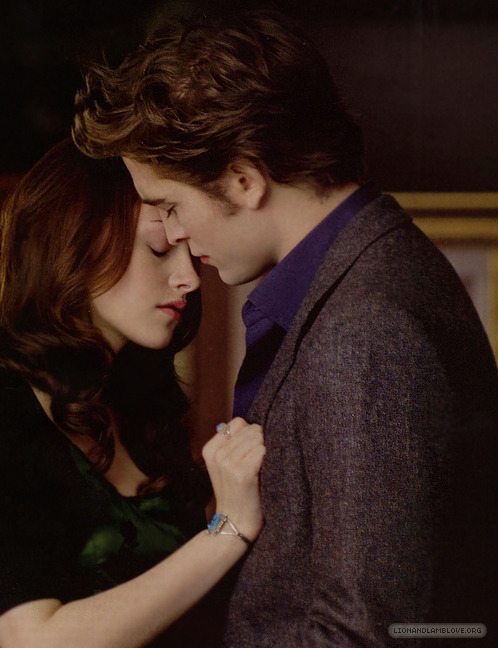
Let’s look at an example from pop culture. I give you the Love Languages of Bella and Edward.

It is possible for a person to have more than one love language. For Bella, I definitely think she’s a mixture of quality time and physical touch. I mean, for Pete’s sake, she nearly went nuts when Edward vanished in New Moon. In all the books, his proximity to her body is what she needs to feel like he loves her. The more he’s around, the more time they spend together, the more she feels loved. Yeah, this sounds like she’s needy, but it’s just her love language–it’s part of her makeup–what she needs to feel loved.

And Edward. His love language is words of affirmation. This should be glaringly obvious, I think. He needs to be told over and over and over and over and over that he’s not a horrible creature, that he’s not hurting Bella, that she truly does love him, that he’s a good person/vampire/humanesque creature. He needs to hear it–words that affirm.

Who agrees with my analysis of these two? 

Focusing a little attention on your characters and their love language helps develop not only the backstory (why does she need words of affirmation?) but also helps you to create the romance. 

Not every girl falls for the man who buys her fancy things. (Crazy, right?)

Not every guy needs to spend every waking moment with his girl to know that they are in love.

Develop your characters around this concept– that they each speak a Love Language, and you’ll develop a lasting romance.

Share with me: Can you think of characters in a novel that have easily identifiable Love Languages? What about your characters? Can you identify what Love Language they are speaking?

10 Comments

Filed under Uncategorized